Ask for the reader’s answer before showing other responses
Invite the reader to formulate an answer to a specific question before revealing a comparable set of responses, then make that response set available for reflection rather than treat it as an automatic answer key.
The reader has relevant experience or assumptions that can be articulated before seeing a comparison set.
The sequence creates a personal point of reference for subsequent material and changes when the reader is asked to participate.
Ask for an actual answer before presenting comparable responses, then state a reflective use for comparison without making the responses an automatic answer key.
The questionnaire and definition chapter give readers something of their own to compare with the responses that follow. The ordering makes articulation part of the book’s work: the reader can notice priorities or assumptions that might otherwise remain unstated. Its value does not depend on declaring one respondent correct.
Every identified example.
2 source-checked examples from the published book studies. The full catalog has not been assessed for this practice.
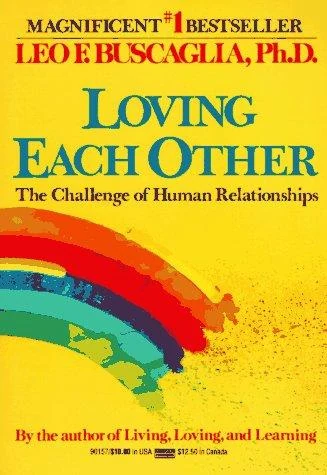
Loving Each Other
Leo F. Buscaglia · 58 weeksComplete the same questions before reading the returns
SHORT SOURCE EXCERPT“answer them now before you read on.”
After describing the questionnaire’s purpose, Buscaglia asks the reader to answer its questions before continuing. The questions ask about primary and secondary relationships, helpful and harmful qualities, an ideal relationship and advice. The next material describes the respondent group before beginning the reported priorities.
The sequence gives the reader a personal starting point before the group’s priorities become available. Including the respondent profile also leaves visible that the comparison set comes from particular people, rather than from a neutral universal standard.
Loving Each Other
Leo F. Buscaglia · 58 weeksWrite a definition before meeting a range of alternatives
SHORT SOURCE EXCERPT“define a loving relationship as you see it.”
The chapter describes respondents finding the definition question difficult, then asks readers to make their own definition before sharing the responses. A sequence of different definitions follows. The close emphasizes articulating and agreeing on expectations among the people in the relationship rather than choosing one author-approved formula.
The ordering lets the reader compare an initial formulation with several alternatives. The closing comment supplies a purpose for the comparison while preserving differences in what people want a relationship to include.
Make the decision
deliberately.
Useful for reflective nonfiction in which readers bring relevant experiences or assumptions and would benefit from stating them before encountering examples or a collective response.
- Choose a question the reader can answer from experience, and ask it clearly before presenting the comparison material.
- Use comparable prompts for the reader and the people whose responses will follow; explain where the sources or circumstances differ.
- Give the later material a stated reflective purpose and preserve room for disagreement, revision or a different personal answer.
A near miss
Ask a rhetorical question and immediately answer it for the reader, or place a generic reflection prompt after material that has already supplied the expected response.
Where the lesson stops
The reader may skip the pause. Respondents come from a selected group, and neither their frequency of agreement nor the reader’s answer establishes a diagnostic result or an effective relationship practice. The print response space has not been visually verified.
This is an editorial reading of craft. These examples do not establish that the practice caused, or predicts, a longer bestseller run.