Give readers parts they can point to.
Cue, routine and reward become repeated questions readers can ask of a case. The model earns its name by helping them locate something, compare something and eventually change something.
Consider this when readers need to inspect unfamiliar cases using the components of your explanatory model.
Distinct roles turn the model into repeated questions that connect examples, later refinements, and eventual application.
Beyond naming a framework, give each component an observable job and show a decision that changes when the parts are distinguished.
A name alone is a label. Here the named parts produce an operation: separate what starts a behavior, what someone does, and what follows it. Keeping those roles visible reduces the work of comparing unfamiliar cases. Later concepts also matter: craving adds anticipation, and the discussion of change introduces belief and community. The three-part picture is the starting model, not a complete account of every behavior.
Every identified example.
1 source-checked example from the published book studies. The full catalog has not been assessed for this practice.
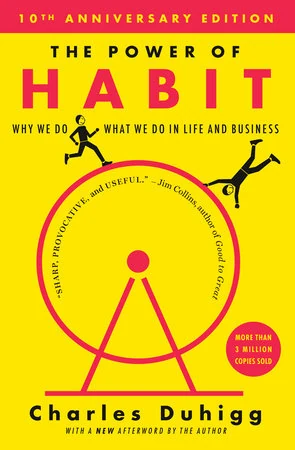
The Power of Habit
Charles Duhigg · 34 weeksThe loop has three inspectable roles
A repeated behavior is separated into its cue, routine and reward. The roles become questions readers can carry into another case.
Cue, routine and reward become repeated questions readers can ask of a case. The model earns its name by helping them locate something, compare something and eventually change something.
Make the decision
deliberately.
When an explanatory book needs readers to inspect, revise or apply an idea in a specific situation.
- Give each component a different job. If two labels describe the same thing, refine the model.
- Map the same roles in multiple actual cases. Mark an unknown component as unknown.
- Show one decision the decomposition changes. Then state where additional concepts or evidence are needed.
A near miss
A memorable acronym appears once, followed by anecdotes that never use its components to explain a difference.
Where the lesson stops
These are the book’s explanatory mappings. Identical labels do not establish identical mechanisms across animal learning, consumer behavior and clinical cases. The book itself warns that drawing a loop is not sufficient treatment.
This is an editorial reading of craft. These examples do not establish that the practice caused, or predicts, a longer bestseller run.