Son of the Morning Star
Explore Custer’s life, the Little Bighorn and their accumulated legends through the people, documents and conflicting recollections surrounding them.
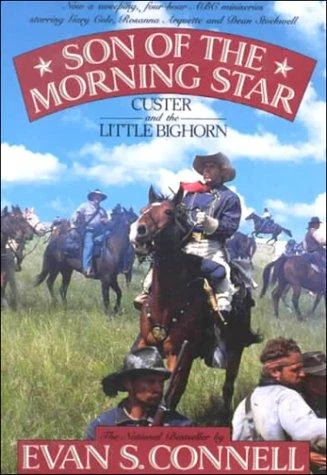
Read the decisions beneath the cover.
Keep judgments distinct from disputed facts, and let the source comparison determine how much a vivid story can support.
Especially useful for: Writers of biography and history whose material includes partisan recollections, contradictory memoirs and contested reputations.
How the decisions work together
A continuous historical mosaic moves from aftermath into lives, prior campaigns, the battle and later memory. Close sequences of judgments make a reputation’s disagreement visible; explicit source comparisons sometimes narrow what a story can establish. The study examines those selected decisions without certifying the historical narrative or treating its skepticism as neutral.
- Enter through aftermath
Let incoming testimony and misrecognition open the event.
- Build context through lives
Move among biographies, documents and earlier campaigns before returning to the central encounter.
- Expose different judgments
Keep opposing evaluations of the same conduct close enough to compare.
- Limit disputed stories
Show which accounts conflict and what the remaining evidence permits.
- Return through memory
Close the narrative among material traces and later recollections rather than a single settled verdict.
2 decisions worth studying.
Start with the choice. Open its application and limits, or follow the source example.
Keep opposed judgments close enough for the disagreement to show
Arrange short assessments of the same person or proposal in a close sequence so that their specific incompatibilities remain visible, while identifying the setting and limits of the selection.
Explore the decision, application & limits
Why this choice matters
Calling Reno either brave or cowardly would erase the disagreement over what his conduct meant. The sequence lets readers see that condemning rashness, condemning hesitation and crediting survival are different evaluations, even when they concern the same commander.
Try the decision in your own work
- Keep the person and the question of conduct constant across the selected assessments.
- Choose judgments whose particulars differ, rather than collecting interchangeable praise and blame.
- Identify who speaks, when and in what source; preserve anonymity where the record does not identify a speaker.
- Make the selection’s limits visible and distinguish a judgment of character from evidence about an event.
Show the conflict before deciding how much a story can bear
Identify conflicting source accounts, explain the basis for choosing among them or retaining uncertainty, and make the narrative’s degree of precision agree with that decision.
Explore the decision, application & limits
Why this choice matters
A source comparison can narrow what a story warrants without supplying a replacement story. Connell gives the reader the competing claims and then limits either a confident accusation or the weight placed on a dramatic anecdote.
Try the decision in your own work
- Specify the claim under dispute and identify the accounts that conflict.
- Show the concrete reason for doubting, preferring or leaving a version unresolved.
- Keep the conclusion narrower than the evidence: an inconsistency can weaken an anecdote without proving the opposite event or a psychological diagnosis.
Every chapter has a job.
Choose a section to see what it adds and which authoring decisions it makes visible.
Bibliography
A short author acknowledgment precedes an alphabetized list of sources, including memoirs, testimony collections and later histories. The list identifies a source base but does not itself tell the reader which claim each item supports.
Its job in the book
Identify the materials behind the historical narrative and acknowledge research access and correspondence.
A decision to study
Let a bibliography provide a route to sources while keeping important disagreements explicit in the narrative itself.
Supplied text · lines 6965–7764. Summary and role are our analysis.
Link to this chapterThe book’s subject and overall argument
Connell approaches Custer and the Little Bighorn through the arrival of news, surviving witnesses, biographies, earlier campaigns, documents and later recollections. The narrative repeatedly leaves the battle chronology to examine the lives and institutions around it, then returns to the disputed event and the stories that grew around the dead. Its final movement includes material traces, competing accounts and Kate Bighead’s recollection.
Two related decisions make this history useful to writers working with contested material. Connell distinguishes competing judgments of a person from disagreements about what happened, and he sometimes limits a conclusion after showing exactly where testimony or a subject’s own writings conflict. These passages offer inspectable examples of selection and qualification; they do not turn the narrator’s judgments into a neutral or independently verified history.
The supplied text is a continuous mosaic: aftermath leads into testimony and biography, earlier campaigns supply context, the final campaign returns, and later memory and material traces reopen the event. Within that movement, adjacent assessments and explicit source comparisons give disagreement a visible form.
Sources & reading scope
Evan S. Connell, Son of the Morning Star, North Point Press, first eBook edition July 2011; supplied text with inclusive LF anchors.
Confirmed live development-family eligibility before source access. Read the complete whole-source AI synthesis and the summaries, section maps, qualifications and gaps of all twelve ordered segments. Checked the supplied contents and main-text boundaries, inspected the substantive narrative ending and the bibliography/index/imprint, and read each retained comparison with its surrounding source context. Checked purported section boundaries against the source’s quotation breaks rather than treating segment labels as chapter titles. This is a source-checked editorial pass, not a second full reading, an independent review or a verification of the historical events.
- The supplied file identifies the first eBook edition, July 2011, North Point Press, eISBN 9780374708733, and records original publication in 1984. No publisher-controlled edition was compared.
- The supplied contents and body do not mark named or numbered main chapters. The map therefore treats the main prose as one continuous narrative, followed by separately identified bibliography and index; it does not recover unmarked print divisions.
- The narrative has a complete opening and a substantive closing recollection before the back matter. Embedded galley headers and spacing errors remain, and photograph captions survive without the images; visual placement and pictorial claims are not evaluated.
- Historical episodes, quoted testimony, remembered dialogue, translations and character judgments are Connell’s presentation of his sources. Neither the underlying documents nor the events have been independently verified for this study.
- The retained passages show particular choices about disagreement. They do not establish consistent neutrality, equal treatment of every source or a general historical reliability score; the narrator also uses sarcasm, speculative motives and broad cultural generalizations.
- The bibliography records cited or consulted sources without a claim-by-claim audit. The eBook index note is publisher apparatus, and the separate promotional acclaim is not used as evidence of reader response or quality.
- Reader effects and writer usefulness are editorial interpretations. No sales, longevity, causal-effect or independent-review claims are made.
Editorial source check by Codex. No human or independent-model review is claimed. Chapter locations refer to the supplied transcription, not printed page numbers.