“Try to tell the difference…”
The reader receives both visible inputs and intermediate reasons. The invitation to guess is supported by an explanation of what to look for; it is not an unprepared puzzle followed only by the researchers’ authority.
Passages, structures and practical devices, connected to their books and patterns. Every example keeps its source and review status.
Start with reviewed examples. Select any number to compare, with their source context intact.
Explore guided comparisons ↗“Try to tell the difference…”
The reader receives both visible inputs and intermediate reasons. The invitation to guess is supported by an explanation of what to look for; it is not an unprepared puzzle followed only by the researchers’ authority.

“some non-cheaters were needed as a control group…”
This makes the choice of comparison intelligible. The reader can see why a decrease in one group alone would leave an alternative open and why the controls matter to the inference.

“Time for a reality check.”
The passage makes the inferential gap visible: a known world becomes a small observable change, and the conclusion is restricted to what that change can support.

“other interpretations are possible…”
An attractive conclusion is followed by a specific route to misreading it. The passage makes uncertainty part of the inferential work instead of an unrelated disclaimer.

“an intelligent guess…”
The sequence makes the inference inspectable in both directions: conditions produce a form, and the observed form can suggest prior conditions. Calling it a guess prevents the teaching scene from posing as a complete field test.

“In this strange debris of the fishing nets…”
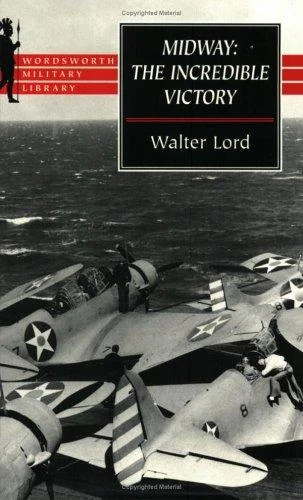
The recovery account exposes the evidentiary basis beneath the preceding narrative. The chapter also leaves a boundary between the inferred former environment and the suggested transmission of an Atlantis-like story.

“two vertical sticks of equal length…”
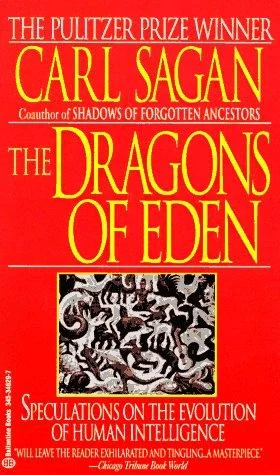
Sagan poses the contrasting shadow observations before walking through curvature and a circumference calculation.

“Eight hundred kilometers times 50…”
The calculation is exposed as a sequence of observations, geometry and multiplication.

“make your own choices and see what implications your alternative suggestions have…”
The calculation makes uncertainty inspectable and connects the search for other civilizations to the survival question that leads into the final chapter. Inviting alternative estimates gives the reader a specific place to examine the reasoning.

“We investigated this as well…”
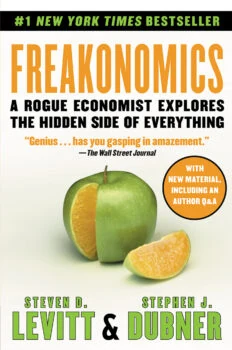
The reader sees an initial comparison, a rival explanation, a revised calculation and a scope limit. Those stages let the evidence do more than lend numerical authority.

“the degree of dominance Salomon enjoyed.”
The passage exposes the intermediate step that makes the comparison explanatory: the availability of alternatives changes the seller’s need to please. Readers can inspect that bridge rather than being asked to accept a direct leap from rudeness to power.

“only six bits are required to specify a given letter…”
The familiar result is accompanied by an inspectable route. The reader can distinguish the arithmetic from the conventional assumptions about a printed page and from the biological input that the demonstration itself does not establish.

“Nothing is certain…”
The conclusion has a traceable route: the reader sees how several different records are made to constrain one identification. The qualifications matter because mutual fit among selected records is still a reconstruction, and revised testimony does not become automatically conclusive.

“Show me…”
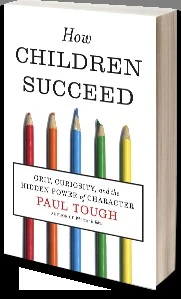
Tough depicts a coach requiring the student to replay the alternative chess moves instead of merely accepting that a move was wrong.

Reviewed examples have a source-linked editorial interpretation. Detected candidates are exact passages or structures retrieved by an explicit rule and still need interpretation. Neither label establishes a cause of bestseller longevity. No missing text is counted as a negative example.