Present concrete inputs and the intermediate reasoning steps that connect them to a conclusion, including a revealing wrong move or alternative where available.
WHEN IT FITS
Consider this when readers can follow a conclusion only if they can inspect the steps that produced it.
POTENTIAL LEVERAGE
Showing inputs and intermediate reasoning gives the reader a way to examine later claims that use the same method.
BEYOND THE FAMILIAR ADVICE
Beyond supporting a claim with evidence, expose the reasoning between evidence and conclusion, including assumptions and plausible wrong turns.
The answer pattern is accompanied by reasons it is suspicious
SHORT SOURCE EXCERPT
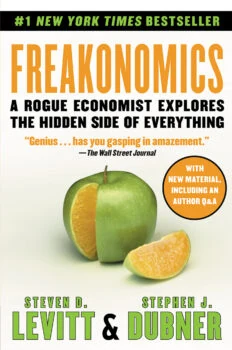
“Try to tell the difference”
WHAT HAPPENS IN THE BOOK
The authors explain candidate traces of teacher answer changing before displaying two classrooms’ response strings. They then reorder one set and identify repeated hard answers, surrounding blanks, correlations and later score changes that make the favored inference plausible.
THE AUTHOR’S DECISION
The reader receives both visible inputs and intermediate reasons. The invitation to guess is supported by an explanation of what to look for; it is not an unprepared puzzle followed only by the researchers’ authority.
A plausible objection changes the follow-up comparison
SHORT SOURCE EXCERPT
“some non-cheaters were needed as a control group”
WHAT HAPPENS IN THE BOOK
When the school system considers retesting suspected classrooms, the authors introduce an alternative: lower scores could result because the repeat test does not count. The reported design therefore includes classrooms thought to have strong teaching and ordinary nonsuspicious classrooms, alongside the suspected group.
THE AUTHOR’S DECISION
This makes the choice of comparison intelligible. The reader can see why a decrease in one group alone would leave an alternative open and why the controls matter to the inference.
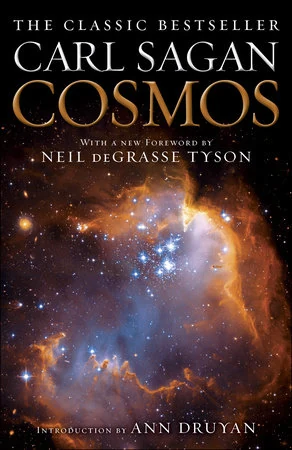
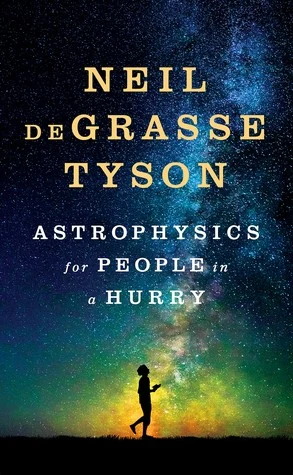
After imagining detailed observations of Earth, Tyson introduces the difficulty of separating its light from the Sun’s glare. He explains stellar motion and transit dimming as alternatives, gives Earth’s fractional blocking of sunlight, and distinguishes discovering the planet from learning what happens on its surface.
THE AUTHOR’S DECISION
The passage makes the inferential gap visible: a known world becomes a small observable change, and the conclusion is restricted to what that change can support.
An intriguing signal still needs competing interpretations
SHORT SOURCE EXCERPT
“other interpretations are possible”
WHAT HAPPENS IN THE BOOK
The hypothetical observers might interpret Earth’s radio emissions as technology, but Tyson raises confusion with planets or the Sun. He then recounts the interpretation of repeating radio pulses and continues to atmospheric signals whose origins also require examination.
THE AUTHOR’S DECISION
An attractive conclusion is followed by a specific route to misreading it. The passage makes uncertainty part of the inferential work instead of an unrelated disclaimer.
A wave’s imagined journey becomes an observer’s cautious inference
SHORT SOURCE EXCERPT
“an intelligent guess”
WHAT HAPPENS IN THE BOOK
Carson first defines height, length, period and fetch, and distinguishes a traveling wave form from the motion of individual water particles. She then follows an imagined Atlantic storm wave through changing conditions into surf, before contrasting visible breaking forms that could suggest a nearby or distant origin.
THE AUTHOR’S DECISION
The sequence makes the inference inspectable in both directions: conditions produce a form, and the observed form can suggest prior conditions. Calling it a guess prevents the teaching scene from posing as a complete field test.
Recovered objects constrain a story of a submerged landscape
SHORT SOURCE EXCERPT
“In this strange debris of the fishing nets”
WHAT HAPPENS IN THE BOOK
After rejecting an Atlantic Ridge identification of Atlantis on chronological grounds, Carson describes Dogger Bank as a different instance of drowned land. She narrates a possible sequence of forest, animal and human life and inundation, then identifies the peat, bones, wood and implements recovered by trawling as the materials scientists used to reconstruct the landscape.
THE AUTHOR’S DECISION
The recovery account exposes the evidentiary basis beneath the preceding narrative. The chapter also leaves a boundary between the inferred former environment and the suggested transmission of an Atlantis-like story.
The estimate changes when civilization lifetime changes
SHORT SOURCE EXCERPT
“make your own choices and see what implications your alternative suggestions have”
WHAT HAPPENS IN THE BOOK
Sagan defines the factors in an estimate of communicating civilizations, comments on their uneven uncertainty and follows their combination. He then contrasts short-lived technological civilizations with a survival scenario, producing sharply different outcomes from the changed assumption.
THE AUTHOR’S DECISION
The calculation makes uncertainty inspectable and connects the search for other civilizations to the survival question that leads into the final chapter. Inviting alternative estimates gives the reader a specific place to examine the reasoning.
A profit comparison is rebuilt after the cost objection
SHORT SOURCE EXCERPT
“We investigated this as well”
WHAT HAPPENS IN THE BOOK
Desmond describes estimating landlord profits from revenue and regular costs, then raises the possibility that repairs, missed payments and vacancies account for the difference. He reports a second calculation including those costs and explicitly separates high-cost housing markets from the pattern he describes elsewhere.
THE AUTHOR’S DECISION
The reader sees an initial comparison, a rival explanation, a revised calculation and a scope limit. Those stages let the evidence do more than lend numerical authority.
The customer’s alternatives connect manners with market power
SHORT SOURCE EXCERPT
“the degree of dominance Salomon enjoyed.”
WHAT HAPPENS IN THE BOOK
Lewis describes the equity department’s lower internal standing, the end of fixed commissions and its speakers’ solicitous treatment of trainees. He then compares trainees with customers: an equity customer can use many brokers, while Salomon’s strength in certain bond markets gives those traders greater freedom in how they behave.
THE AUTHOR’S DECISION
The passage exposes the intermediate step that makes the comparison explanatory: the availability of alternatives changes the seller’s need to please. Readers can inspect that bridge rather than being asked to accept a direct leap from rudeness to power.
Make the library equivalent’s intermediate choices visible
SHORT SOURCE EXCERPT
“only six bits are required to specify a given letter”
WHAT HAPPENS IN THE BOOK
A sequence of binary questions identifies a letter. Starting from the text’s assumed bit total, Sagan then gives approximate conversions into letters, words, pages and book volumes, stating the word length, page density and book size used along the way.
THE AUTHOR’S DECISION
The familiar result is accompanied by an inspectable route. The reader can distinguish the arithmetic from the conventional assumptions about a printed page and from the biological input that the demonstration itself does not establish.
Six kinds of support for the carrier’s probable identity
SHORT SOURCE EXCERPT
“Nothing is certain”
WHAT HAPPENS IN THE BOOK
Lord sets the Nautilus officers’ identification of Soryu against Japanese accounts of a dud striking Kaga. He then compares coordinates, direction of approach, times, recollections and revisions, and the number and side of the torpedoes before offering Kaga as the probable identification.
THE AUTHOR’S DECISION
The conclusion has a traceable route: the reader sees how several different records are made to constrain one identification. The qualifications matter because mutual fit among selected records is still a reconstruction, and revised testimony does not become automatically conclusive.
Quotations are source excerpts; descriptions and explanatory annotations are our analysis. Every match identified in the reviewed material is included here; the rest of the source collection remains to be assessed. Craft comparisons do not establish a longevity effect.
GO DEEPER
Can the reader work out why this is true?
Present concrete inputs and the intermediate reasoning steps that connect them to a conclusion, including a revealing wrong move or alternative where available.
How to inspect this in your own writing
Trace the operation through the actual sequence of the book. Check whether each recurrence changes what the reader can understand or do.
THE BOUNDARY
When this becomes a near miss.
A polished demonstration can conceal assumptions, uncertainty or alternative explanations. A historical measurement and a coached chess decision are different evidence types.