How I Made $2,000,000 in the Stock Market
Follow the narrator’s account of how his beliefs and practices changed between an accidental first gain and the financial result announced in the title.
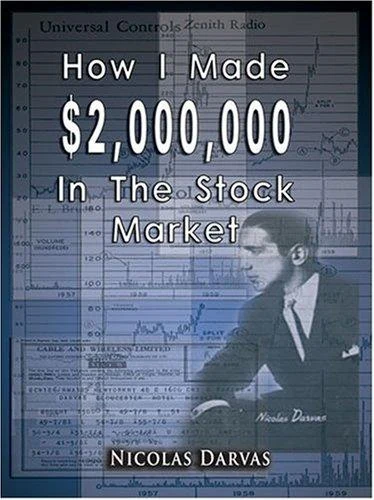
Read the decisions beneath the cover.
Make a failed expectation visibly change the next question, then let the ending enact the conditions of the practice you have described.
Especially useful for: Writers of instructional memoir and explanatory case narratives who need to show learning, revision and a concrete closing routine without turning a success story into proof.
How the decisions work together
Four named phases connect confidence, losses and revised judgments. The first crisis reinterprets an early win, a later market-average episode narrows an overconfident inference, and the last scene returns to a deliberately arranged information routine. These are decisions in narrative construction; the account does not validate the financial method or establish the causes of its reported returns.
- Make the current belief plausible
Show why the narrator commits to an explanation before the reversal.
- Make revision observable
Connect a reported failure to the changed question or narrower inference.
- End inside the working routine
Follow the declared result with a procedure that embodies the practical claim.
2 decisions worth studying.
Start with the choice. Open its application and limits, or follow the source example.
Make a failed expectation change the next question
State a plausible expectation, show what the reported experience fails to support, and return to the same problem with a revised interpretation or a narrower use of the information.
Explore the decision, application & limits
Why this choice matters
A reversal earns its place when readers can identify what it changes. The first crisis reinterprets an earlier success; the market-average episode preserves an input while reducing what the narrator claims it can tell him.
Try the decision in your own work
- Make the earlier expectation and the action it justified explicit.
- Show the specific experience or evidence gap that the expectation cannot accommodate.
- Return to the original problem and identify what the revision changes in interpretation or practice.
- Keep the narrator’s explanation separate from what the available evidence actually establishes.
Finish by enacting the conditions of the central action
Close the book’s discipline argument with a concrete procedure that changes what information reaches the decision-maker and when the work occurs.
Explore the decision, application & limits
Why this choice matters
A final routine gives the abstract claim a form readers can picture. Returning to that routine after the money total also shows what the narrator presents as the ongoing practice behind the achievement.
Try the decision in your own work
- Identify the claim about practice that the ending needs to make concrete.
- Choose a closing action whose timing, inputs or setting visibly embody that claim.
- Connect the procedure to the earlier problem it is intended to address.
- State the limits of the example instead of implying the procedure reliably produces the reported outcome.
Every chapter has a job.
Choose a section to see what it adds and which authoring decisions it makes visible.
Interview with Time Magazine
Darvas recounts a reporter’s doubts, examination of records and additional visits, followed by what he says became an article. The passage supplies a scene of scrutiny inside his memoir; it is not the independently reproduced article or an audit report.
Its job in the book
Present the narrator’s account of public scrutiny after the claimed achievement.
A decision to study
An attributed verification scene must remain distinguishable from evidence a reader can independently inspect.
Supplied text · lines 4079–4129. Summary and role are our analysis.
Link to this chapterThe book’s subject and overall argument
Darvas presents his market education as four successive roles: gambler, fundamentalist, technician and techno-fundamentalist. A later cable and a claimed financial payoff introduce the story, but the chronology repeatedly interrupts rising confidence with losses, revised explanations and changed working arrangements.
The useful craft here is the visible connection between a mistaken expectation and the next question, followed by a closing routine that embodies the narrator’s discipline claim. Tables, an interview account and appendix commentary add apparent specificity, but this study distinguishes those narrative devices from independent verification; the supplied appendix lacks the cable and chart images it describes.
Four named phases organize ten chapters of learning, application and relapse. The final crisis shifts attention from a stated method to its working conditions, and the main narrative closes by enacting the protected routine before the interview account and appendix revisit the claimed achievement.
Sources & reading scope
Supplied Evergreen Bestsellers text; all ten main chapters and appendix prose, with referenced cable and chart illustrations absent.
Read the complete whole-source AI synthesis and the summaries, section maps, qualifications and gaps of both ordered source segments. Checked all main chapter and part headings against the contents and body, inspected chapter openings and endings, and directly checked every retained example with its preceding setup and subsequent qualification. Inspected the interview and appendix prose to distinguish the narrator’s verification claims from accessible evidence. This is a source-checked editorial pass, not a second complete reading or an independent-model review.
- The supplied text identifies Evergreen Bestsellers and ISBN 9789387550469. Its filename says 1970, but its front matter does not establish that publication date; an unexplained spaced numeric string is not treated as a date. No publisher-controlled edition comparison was completed.
- All ten main chapters in four named parts are present, along with an opening cable, the Time interview account and two appendix sections. The appendix describes cable reproductions and lettered chart points, but those images are absent from the supplied text. This is complete textual section coverage, not certification of a complete illustrated edition.
- The transactions, motives, returns and later diagnoses are presented by the narrator or the appendix’s editorial voice. They were not checked against brokerage records, contemporaneous market data or the Time article. The narrative does not isolate the effect of the method or of the working conditions.
- The supplied numeric text contains apparent corruption, including a Texas Gulf Producing price range inconsistent with its reported total. Printed transaction figures and table arithmetic have not been certified.
- This study concerns the construction of a financial memoir and explanation. It provides no current investment advice and does not validate trading rules, predicted returns or the safety of the procedures described.
- Reader effects are editorial inferences, not measured results or demonstrated explanations of sales or longevity.
Editorial source check by Codex. No human or independent-model review is claimed. Chapter locations refer to the supplied transcription, not printed page numbers.