Let a failed expectation improve the explanation
Present a plausible explanation or expectation, show the observation or evidence gap it cannot account for, and return to the same question with a revised account that changes the later interpretation or application.
Consider this when a plausible first explanation leaves an important observation unresolved and a more precise account is available.
The unresolved case gives new evidence a purpose and changes what readers can see when the chapter returns to its opening example.
Beyond including an objection, let a documented failure require a specific revision and use that revision to reinterpret an earlier success.
A specific failure gives the revision a visible job. Readers can inspect what changed and where the improved or narrower account is used, rather than treating an admission of error as a personal aside. The examples include changed models, a corrected inference and a narrowed recommendation; their reader effects are editorial interpretations.
Every identified example.
14 source-checked examples from the published book studies. The full catalog has not been assessed for this practice.
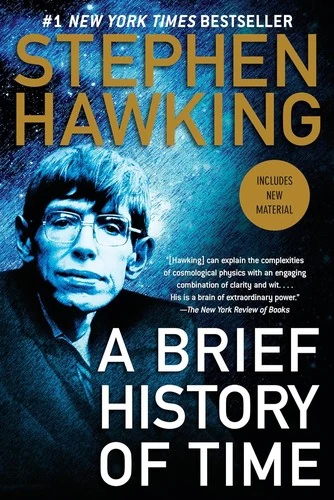
A Brief History of Time
Stephen Hawking · 112 weeksThe Earth analogy does not determine the direction of disorder
SHORT SOURCE EXCERPT“I was misled partly by the analogy”
Hawking first describes the reversal of disorder he expected in a contracting universe. He identifies a misleading transfer from the poles of Earth and a simple model, credits Page and Laflamme for corrections, and states that disorder would continue increasing before returning to why observers find the arrows aligned.
The passage retains the attractive first account so the reader can locate the failed inference. Its correction changes the question the remaining explanation must answer.

The Anxious Generation
Jonathan Haidt · 102 weeksThe anticipated gaming parallel becomes a conditional account
SHORT SOURCE EXCERPT“I do not find clear evidence”
Haidt reports expecting games to explain boys’ difficulties in a way parallel to his account of social media and girls. He then rejects a blanket warning, presents reported benefits, distinguishes problematic use from engaged or casual use, and examines opportunity costs before returning to the chapter’s opening personal case.
The revision changes the unit of judgment from a medium alone to the role it plays and what it displaces. Keeping the original expectation visible lets the reader identify the actual change in the argument.
The Anxious Generation
Jonathan Haidt · 102 weeksThe later application keeps the revised distinction
In the parent chapter, Haidt reconnects screen use to displaced interaction and sleep and explicitly recalls the qualified gaming account from Chapter 7. His discussion distinguishes moderate use from use that interferes with other areas of life.
The later section makes the earlier revision consequential to the book’s application rather than leaving it as a local concession. The test for the writer is whether the distinction survives the move into recommendations.

Cosmos
Carl Sagan · 70 weeksA small discrepancy changes the orbit
SHORT SOURCE EXCERPT“two of Tycho’s further observations were inconsistent with Kepler’s orbit”
Sagan first describes why circular motion seemed reasonable and how Kepler’s calculation fitted several observations. Two further observations do not fit; after explaining the size of that discrepancy, the narrative follows the search for a curve that accounts for the same motion.
The reader is given the initial success, the unresolved measurement and the changed model in sequence. The ellipse is an answer to a demonstrated problem rather than a fact attached to a famous name.

I Feel Bad About My Neck
Nora Ephron · 47 weeksFeeling at home elsewhere changes the story of the old apartment
SHORT SOURCE EXCERPT“Within hours of moving in, I was home.”
After repeated arguments for staying and an attachment described as love, another rent increase leads the narrator to leave. She feels at home almost immediately in the new apartment, becomes embarrassed by her earlier certainty and rereads the old attachment as partly her capacity to rationalize. The close begins praising the new neighborhood even while denying a new romance with it.
The new experience corrects an earlier limit of imagination, and the final language keeps the correction from turning into a claim of permanent self-knowledge. The reader can see both changed understanding and the possible return of an old habit.
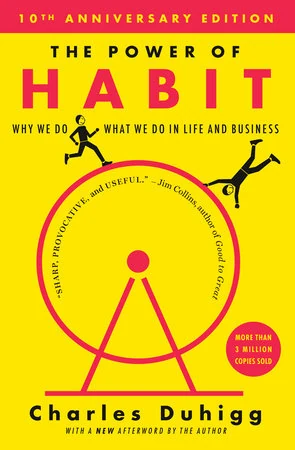
The Power of Habit
Charles Duhigg · 34 weeksAn odor problem its owner does not notice
The Febreze team visits a woman with nine cats who does not notice their smell. A useful product is missing the perceived cue the initial explanation assumed.
Chapter 2 does something stronger than illustrating a rule: it teaches an attractive first explanation, shows what it cannot explain, and makes the reader revisit the opening success with a better question.
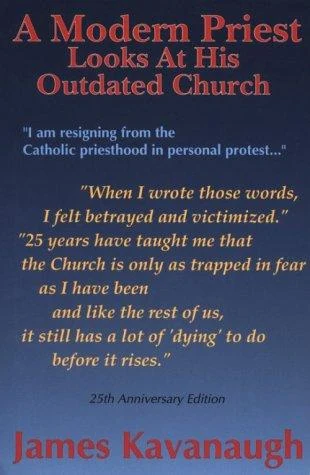
A Modern Priest Looks at His Outdated Church
James Kavanaugh · 31 weeksReturn to the counsel that caused the reported burden
SHORT SOURCE EXCERPT“I was wrong”
Kavanaugh recalls arranging restricted readmission to communion for a remarried woman under a requirement of sexual abstinence. Her later letter reports fear, marital strain and uncertainty over burial; he recalls a reassurance that still avoided changing the restriction. The chapter then prints an address retracting that earlier counsel and asking forgiveness.
The later information does not remain a sad anecdote. The author returns to his own original decision, changes the response he is prepared to give and explicitly leaves room for the recipient’s conscience to differ. The revision enacts his broader demand that people matter more than impersonal compliance.
Anyone Can Make a Million
Morton Shulman · 30 weeksThe gain survives, but the tip’s rationale does not
SHORT SOURCE EXCERPT“the wrong company”
A friend supplies what he presents as reliable advance information, and Shulman reports buying International Copper, watching an initial fall and selling after a rise. Only after that sale does the friend call to say he gave the wrong company name. Shulman treats the profit as accidental rather than evidence that the original tip was sound.
The narrative postpones the disconfirming fact until the apparent win is established. That ordering changes the interpretation of the same transaction: a favorable result remains, but its advertised explanation no longer accounts for it.
Second Tree from the Corner
E. B. White · 30 weeksThe berries change what the speaker does
SHORT SOURCE EXCERPT“The booklet gives you the complete story.”
The speaker begins spraying in a pastoral setting while parenthetical instructions and promotional claims interrupt the verse. Discovering wild strawberries in the treated strip prompts self-questioning; he walks home and puts the pump away. A final parenthetical notice still advertises available container sizes.
The failure is the gap between a procedure treated as sufficient and the consequences the speaker had not considered. Alternating registers lets that gap remain visible: the lyric action changes while the technical and commercial voice continues.
How I Made $2,000,000 in the Stock Market
Nicolas Darvas · 27 weeksA loss changes what the first win meant
SHORT SOURCE EXCERPT“Where was the science?”
After treating Jones & Laughlin as a near-certain result of analysis, Darvas narrates its fall and his sale at a loss. He looks back to the confidence produced by his first Brilund gain and the rising market, then asks a different question when a stock chosen for its rising price recovers part of the loss.
The setback does more than make the narrator suffer: it breaks the explanation that justified his commitment. Revisiting the earlier success prevents the story from simply replacing one profitable anecdote with another without acknowledging what he had believed.
How I Made $2,000,000 in the Stock Market
Nicolas Darvas · 27 weeksA useful input survives a failed prediction rule
SHORT SOURCE EXCERPT“Soon after, I found out that this was not true.”
Darvas adds the Dow-Jones average to his cables after noticing movements his individual quotations do not explain. He first expects his stocks to follow the average mechanically, reports repeated errors, and keeps the added input for the narrower purpose of assessing market conditions.
The sequence separates acquiring useful information from making an overconfident inference from it. The revision has an observable consequence: the same cable field remains, but the narrator changes the question he asks of it.
My Years with General Motors
Alfred P. Sloan Jr. · 22 weeksThe failed engine program changes who owns the problem
SHORT SOURCE EXCERPT“We have tried that and we have failed.”
Following its opening contrast between adopted principles and actual practice, the chapter reports engine defects, cancellation and recall. Sloan’s correspondence says that forcing the disputed project on divisions has failed; the proposed response places development responsibility in a separate operation under Kettering while freeing the divisions to pursue their other programs. The close identifies distinctions between corporate and divisional functions, and research and product engineering, as lessons of the episode.
The retained failure has a consequence for the explanatory model: sound principles do not implement themselves, and divided responsibility requires a different arrangement. The later committee chapter carries the coordination problem forward.

The Fire from Within
Carlos Castaneda · 22 weeksRepair the picture the learner actually formed
SHORT SOURCE EXCERPT“calling it a band was misleading”
The narrator says he imagined the band as a ribbon on a ball’s surface. Don Juan replaces that picture with a disk extending through a cheese ball, draws and partly erases a diagram, and explains why a movement into depth can appear leftward. He then applies the account to the narrator’s retained identity and to the task of retracing earlier movements.
The analogy responds to a diagnosed error rather than merely decorating a definition. Identifying the learner’s picture lets the revised explanation change what a familiar phrase is taken to mean and what the learner is asked to reconstruct.
The Fire from Within
Carlos Castaneda · 22 weeksRevise the expectation that seeing produces understanding
SHORT SOURCE EXCERPT“there is no way to speed up understanding”
After the narrator recalls an earlier experience yet worries that its significance was lost, don Juan admits having expected seeing the mold of man to produce understanding. He says induced change was insufficient and describes gradual reinforcement in a new position. The narrator then recalls five further encounters and explains how his response and interpretation changed over time.
The teacher’s admission changes the stated instructional problem: a powerful event must be followed by a process. The subsequent recalled encounters give the revised account a place in the narrative, making the limitation more concrete than a general warning that learning takes time.
Make the decision
deliberately.
When an explanatory book needs readers to inspect, revise or apply an idea in a specific situation.
- State the earlier explanation or expectation and why it seemed plausible.
- Identify the specific observation, objection or lack of evidence that requires a change, and credit its source.
- Return to the same question with the revised account; show how that revision changes the interpretation or later application.
A near miss
A token objection appears in a footnote while every main-text example confirms an unchanged slogan.
Where the lesson stops
The revision is part of each author’s presented reasoning, not independent validation of the evidence or the replacement account. A correction can narrow a claim without disproving it, and a neat narrative can hide unresolved disputes. Preserve each example’s historical, empirical and source limits.
This is an editorial reading of craft. These examples do not establish that the practice caused, or predicts, a longer bestseller run.