Incredible Victory
Understand the battle’s surprising outcome through the decisions, experiences and narrow escapes of the people involved.
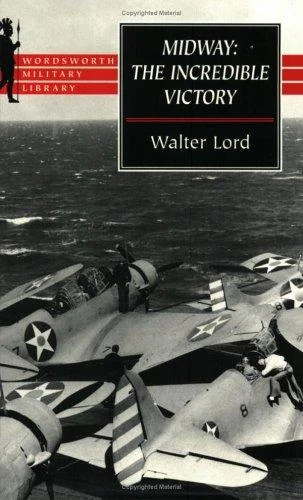
Read the decisions beneath the cover.
Connect viewpoints through the action passing between them, then show the reasoning and source choices behind disputed details.
Especially useful for: Writers reconstructing crowded events from participants whose actions intersect and whose recollections sometimes conflict.
How the decisions work together
Preparations become a battle told through connected attacks, responses and rescues. The Riddles section and acknowledgments then show selected inference and reporting steps. This is a study of the supplied prose: images are absent, historical accounts are not independently verified, and the appendix’s caution does not consistently match the main narrative’s confidence.
- Establish opposed expectations
Show what each side prepares for and believes it knows.
- Connect through action
Let an encounter carry attention into another participant’s response.
- Follow the consequences
Continue through damage, recovery, rescue and return.
- Expose selected reasoning
Show how records and recollections support a probable reconstruction or a reporting choice.
3 decisions worth studying.
Start with the choice. Open its application and limits, or follow the source example.
Let the action carry attention to the people it reaches
Move narrative attention from one participant to another through their direct encounter, then follow the new participant into a connected encounter so the relationships themselves organize the sequence.
Explore the decision, application & limits
Why this choice matters
The shift of viewpoint follows something crossing between participants: an attack, recognition, damage or a response. That can keep a crowded account connected while showing that the same encounter imposes different immediate tasks on its participants.
Try the decision in your own work
- Establish what the initiating participant is doing and the immediate contact it creates.
- Move attention to a named recipient who must recognize or respond to that action.
- Carry the consequence into the next connected action, preserving the shared setting and the limits of what each participant could know.
- Distinguish the author’s reconstruction of perceptions and exact timing from independently documented observation.
Make a disputed identification an inspectable chain of reasons
Present concrete inputs and the intermediate reasoning steps that connect them to a conclusion, including a revealing wrong move or alternative where available.
Explore the decision, application & limits
Why this choice matters
The reader can inspect how position, approach, timing, testimony and torpedo details bear on one disputed identification. Keeping those inputs separate makes the conclusion more assessable than merely citing authority or announcing that the familiar account is wrong.
Try the decision in your own work
- Name the competing identifications and the evidence each would need to fit.
- Show how each input constrains the possibilities, including its provenance and limitations.
- State the conclusion at the supported level of certainty and identify evidence that could still complicate it.
Test whether conflicting recollections describe different moments
Identify conflicting source accounts, explain the basis for choosing among them or retaining uncertainty, and make the narrative’s degree of precision agree with that decision.
Explore the decision, application & limits
Why this choice matters
The conflict changes once each recalled location is placed on a timeline. A witness can remember a real transfer yet answer the wrong time-specific question; reconstructing the sequence provides a reason to choose the relevant location.
Try the decision in your own work
- Keep each recalled location and the event-time question distinct.
- Seek records that can place movements in sequence, rather than choosing the most confident recollection.
- Explain which moment the final location applies to and disclose when the underlying records cannot be inspected in the book.
Every chapter has a job.
Choose a section to see what it adds and which authoring decisions it makes visible.
6. The Target Attacks
Successive American attacks interrupt Japanese preparation and accompany changing reports of enemy ships. The chapter ends as another formation approaches the Japanese force directly.
Its job in the book
Make preparation and interruption interact across the same time window.
A decision to study
Organize repeated attempts by what each changes in the receiving side’s options.
Supplied text · lines 1309–1606. Summary and role are our analysis.
Link to this chapterThe book’s subject and overall argument
Lord tells Midway through preparations, attacks, damage control, rescue and homecoming, shifting among named participants on American and Japanese ships and aircraft. The foreword frames the outcome as an unlikely victory, while the chapters make individual actions and changing information carry the battle forward. Home Again extends the account through survival and return before restoring the book’s victory frame in a final view of the flag over Midway.
For writers, the strongest decisions are the transfer of attention through connected actions, the explicit reasoning behind a probable identification and a documented example of reconciling conflicting recollections by chronology. The latter two appear after the main narrative. Their value lies in making selected reporting and inference steps inspectable, while the differences between their qualifications and the more confident scenes remain visible.
Thirteen chapters move from opposed preparations into intersecting attacks and aftermath. Direct encounters carry attention across participants; a separate Riddles section and acknowledgments then expose selected reasoning and source decisions behind the story.
Sources & reading scope
Walter Lord, Incredible Victory, supplied text identifying a 1967 edition; inclusive LF anchors.
Confirmed live development-family eligibility before source access. Read the complete whole-source AI synthesis and all six ordered segment summaries, section maps, qualifications and gaps. Checked all thirteen body chapter headings against the contents, inspected every chapter opening and ending and the complete Home Again close, read both retained encounter sequences and the full Riddles section, and inspected the acknowledgments and contributor roster. Compared the Nautilus appendix qualification with its main-narrative presentation and read the Buckmaster reconciliation in context. This is a source-checked editorial pass, not a second full reading, independent review or verification of the naval history.
- The supplied source is headed Walter Lord, Incredible Victory, and identifies a Harper & Rowe edition published in 1967. It supplies no ISBN or later-edition imprint; the filename’s 2013 date is not used to identify an inspected 2013 edition. No publisher-controlled copy was compared.
- All thirteen numbered chapters and the substantive Home Again ending are present, followed by The Riddles of Midway, acknowledgments and a contributor list. No missing main-prose continuation was demonstrated in the inspected boundaries. This is not a certification against a complete print edition.
- PHOTOS and PHOTOS II appear only as headings. The figures referenced in the Riddles section are also absent; the study evaluates surviving prose, not diagram accuracy, visual layout or the complete illustrated apparatus.
- Scenes, private thoughts, remembered dialogue and timing are Lord’s reconstruction from the materials he describes. The original interviews, logs, action reports and translations were not independently checked, and present historical conclusions are outside this study’s scope.
- Lord describes his time convention in the Riddles section: local time during preparations, then Midway time at sea. That stated convention does not independently verify every timestamp or establish exact simultaneity among recalled events.
- The main narrative presents the Nautilus target as Kaga more firmly than the Riddles section’s probable identification. The study retains this difference and does not claim that uncertainty is consistently carried into the scenes.
- The acknowledgments and contributor list describe a source base and selected reconciliations. They do not attribute every scene to a specific witness or verify reconstructed interiority; the account also carries a strongly celebratory frame and period language.
- Reader effects and writer usefulness are editorial interpretations. No historical accuracy score, causal reader-response claim, independent review or untouched-holdout result is established.
Editorial source check by Codex. No human or independent-model review is claimed. Chapter locations refer to the supplied transcription, not printed page numbers.