Loving Each Other
Encourage deliberate reflection on the qualities and expectations involved in relationships, using the author’s discussions and other people’s responses to help readers articulate their own.
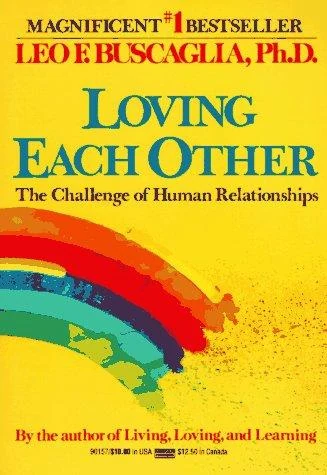
Read the decisions beneath the cover.
When the reader’s own expectations matter, ask for a concrete answer before showing other people’s responses, and explain what the comparison can and cannot do.
Especially useful for: Reflective nonfiction and practical essays that draw on respondents’ experiences and want readers to articulate their own assumptions.
How the decisions work together
The book moves from broad claims about relationships into a questionnaire and repeated invitations to respond. Those early activities give the later discussions a personal reference point, while the selected respondents’ voices remain separate from a universal standard.
- Challenge the effortless ideal
The Foreword, Preamble and Myth establish the subject and the limits of preserving every relationship.
- Invite an initial answer
The Study and definition chapter ask readers to respond before revealing other people’s answers.
- Develop selected qualities
Six topical discussions connect the inquiry with scenes, quotations and exhortation.
- Return to voices and continued work
Respondent advice and two synthesis chapters frame relationships as requiring ongoing attention.
1 decision worth studying.
Start with the choice. Open its application and limits, or follow the source example.
Ask for the reader’s answer before showing other responses
Invite the reader to formulate an answer to a specific question before revealing a comparable set of responses, then make that response set available for reflection rather than treat it as an automatic answer key.
Explore the decision, application & limits
Why this choice matters
The questionnaire and definition chapter give readers something of their own to compare with the responses that follow. The ordering makes articulation part of the book’s work: the reader can notice priorities or assumptions that might otherwise remain unstated. Its value does not depend on declaring one respondent correct.
Try the decision in your own work
- Choose a question the reader can answer from experience, and ask it clearly before presenting the comparison material.
- Use comparable prompts for the reader and the people whose responses will follow; explain where the sources or circumstances differ.
- Give the later material a stated reflective purpose and preserve room for disagreement, revision or a different personal answer.
Every chapter has a job.
Choose a section to see what it adds and which authoring decisions it makes visible.
The Challenge of Human Relationships
Ten titled discussions revisit self-knowledge, ordinary irritants, spontaneity, consideration, control, blame, friendship, rituals, dreams and courage. The sequence collects recurring concerns in a more directly practical form.
Its job in the book
Synthesize themes into a set of areas for attention.
A decision to study
Let a synthesis give the reader distinct decisions to consider rather than repeat only the book’s central value.
Supplied text · lines 1977–2237. Summary and role are our analysis.
Link to this chapterThe book’s subject and overall argument
Leo F. Buscaglia presents loving relationships as an ongoing practice requiring attention and learning. Opening reflections challenge the expectation of effortless, permanent happiness while acknowledging that some relationships should end. A questionnaire sent to previous correspondents supplies reported priorities and responses that inform discussions of communication, honesty, forgiveness, joy, jealousy and intimacy.
The book combines personal memories, reported encounters, quotations and practical exhortation. It asks readers to answer questions before seeing respondents’ answers, then later gives a separate chapter to respondents’ advice. A final synthesis treats relationships as changing activities that need continued care, followed by an annotated bibliography. The survey and the psychological, health and relationship claims remain the author’s presented material; the study examines the book’s design rather than validating its recommendations.
Move from the myth of effortless happiness to an inquiry that includes the reader, then develop selected relationship qualities through essays, respondent advice and a concluding synthesis. Asking for an answer before showing responses makes reflection part of the sequence rather than an exercise appended only at the end.
Sources & reading scope
Leo F. Buscaglia, Loving Each Other; supplied local scanned-text extraction; filename labels 1986, but no title-page, copyright or ISBN statement establishing the printing is present in the supplied text.
The completed whole-source AI synthesis supplied candidate observations and the broad argument map. This Codex editorial pass checked original source headings, section boundaries, openings and selected argumentative contexts; inspected every retained example; checked the existing pattern dictionary and base examples; and rewrote or rejected nominations. It is a source-checked editorial pass, not a new independently adjudicated whole-book reading.
- No human or independent-model review has been completed.
- The local extraction has not been compared page by page with a publisher edition; graphical layout and completeness are not independently certified.
- The book’s empirical and historical claims are described as claims made by the author, not independently verified findings of this study.
- Proposed effects on readers are editorial interpretations, not measured comprehension, behavior or longevity effects.
- The supported catalog attributes the work to Leo F. Buscaglia, and the extraction repeatedly identifies Loving Each Other in running heads. Its filename’s 1986 label is not an independently verified edition date; the supplied file begins without an intact bibliographic title/copyright page.
- The supplied main text contains the Foreword, Preamble, The Myth, The Study and ten numbered chapters. The final chapter reaches a substantive close at LF2345, followed by an annotated bibliography and permissions acknowledgments. This establishes the inspected main-prose coverage, not page-by-page completeness against a particular edition.
- Running heads and damaged line breaks are embedded in the extraction. The Chapter 1 and Chapter 5 titles use clear repeated running-head wording where the opening heading is shortened or damaged. Print spacing, blank response areas, italics and one-item-per-page claims are not certified.
- The survey was mailed within a pool of people who had already written to the author, with over 600 returns reported. Buscaglia explicitly describes respondents as an unusually educated, relatively affluent group and calls for work with other populations. The survey is not treated here as representative evidence about all relationships.
- The topical chapters draw on the survey but do not simply reproduce one ranked list in its exact order. The lists, selections and chapter sequence remain distinguishable.
- The author’s health, psychological and interpersonal claims, etymologies, stories and cited research are not independently evaluated. This is not clinical or relationship advice; the Preamble’s acknowledgment that some relationships should end remains part of the book’s stated scope.
- The invitation to pause and answer is visible in the text; whether readers actually do so, and with what effect, is not established. The examples do not turn the questionnaire into a validated diagnostic instrument.
Editorial source check by Codex. No human or independent-model review is claimed. Chapter locations refer to the supplied transcription, not printed page numbers.