The Power of Positive Thinking
Learn the mental and spiritual practices that Peale offers for meeting ordinary difficulties with faith and confidence; the study examines how he packages that promise without treating his reported outcomes as demonstrated effects.
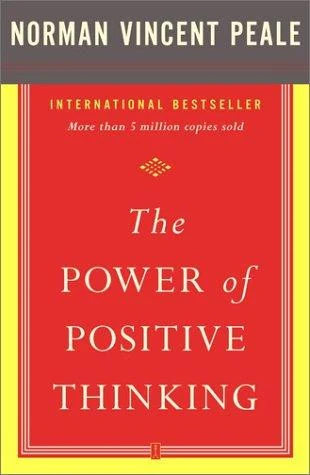
Read the decisions beneath the cover.
A practical book can specify the next encounter with its key words: choose the text, give it a place outside the book and explain how it will be used again.
Especially useful for: Writers of practical or reflective nonfiction whose readers need a brief reminder after the reading session.
How the decisions work together
Peale organizes the manual around recognizable difficulties and repeatedly moves from testimony to instruction. The strongest portable author decision is the transfer of selected language to everyday objects and repeated use. Its craft value can be examined without accepting the outcomes asserted for the underlying spiritual techniques.
- State the practical promise
The Preface qualifies the ambition and the Introduction presents applied Christianity as a manual for ordinary difficulties.
- Develop the recurring practices
Confidence, peace, energy, prayer and expectation are explained through cases, quotations and reader instructions.
- Extend the same premise
Later chapters take the practices into problems, health, relationships, grief and recovery accounts.
- Send the reader back to use
Some chapter endings gather instructions; portable text and the Epilogue ask for continued practice beyond finishing the book.
1 decision worth studying.
Start with the choice. Open its application and limits, or follow the source example.
Give a sentence a place in the reader’s day
Select specific wording, place or ask the reader to place it on an object outside the book, and connect that wording to deliberate recurring use.
Explore the decision, application & limits
Why this choice matters
The author makes decisions that a memorable quotation alone leaves open: which words to retain, where they will be encountered and what to do when they are revisited. This extends the manual’s practice instructions beyond the reading session; improved recall or changed behavior remains an inference.
Try the decision in your own work
- Choose wording that remains accurate and useful when separated from its surrounding explanation; retain a route back to any necessary qualification.
- Specify an appropriate object or location and an occasion or frequency for revisiting the words. Match the placement to the reader’s actual activity.
- Explain what the reader should do with the reminder, and distinguish that instruction from evidence that the reminder produces the promised result.
Every chapter has a job.
Choose a section to see what it adds and which authoring decisions it makes visible.
Introduction: What This Book Can Do for You
Peale announces a practical improvement manual and lists the kinds of benefits he expects it to deliver. He grounds his confidence in his church work and media teaching, presenting reported experience as the basis for the system.
Its job in the book
State the reader contract and asserted basis of authority.
A decision to study
Make the intended use explicit while allowing readers to identify what kind of evidence supports the promise.
Supplied text · lines 107–127. Summary and role are our analysis.
Link to this chapterThe book’s subject and overall argument
Peale presents applied Christianity as a practical manual for changing how a person meets difficulty. Chapters move through confidence, peace of mind, energy, prayer, happiness and worry before extending the approach to personal problems, health, relationships, grief and what he calls a higher power. His principal materials are reported encounters, personal testimony, scriptural passages and instructions for repeated practice; the outcomes are claims made by the book.
The recurring editorial choice is to move between an illustrative story and something the reader is asked to do with its language. Several chapters end in numbered instructions, while others finish with testimony or a direct exhortation. Cards, visible placements and repetition schedules carry selected words beyond the reading session. The brief Epilogue asks readers to return and practice, then closes with a personal pastoral address.
Organize the manual by recognizable reader difficulties, build each discussion through testimony and instruction, and repeatedly convert key language into an action readers can revisit. Later chapters extend the same spiritual premise into more consequential situations, while the Epilogue returns the reader to practice.
Sources & reading scope
Norman Vincent Peale, The Power of Positive Thinking; Inspected Touchstone eBook with retrospective Preface; copyright 1952 and 1956, renewed 1980, First Touchstone Edition 2003; eISBN 978-0-743-25430-4.
The completed whole-source synthesis and all five segment summaries and section maps supplied candidate observations and the book map. This Codex editorial pass checked the live family gate before source access, verified the original source identity, contents, every main heading and chapter ending, and substantive final prose; read the full contexts of every admitted example; compared all 42 current canonical recognition rules and staged peer proposals; and checked base examples. Nominations were rewritten, narrowed or rejected. This is source-checked editorial review, not a new independently adjudicated whole-book reading.
- No human or independent-model review has been completed.
- The local extraction has not been compared page by page with a publisher edition; graphical layout and completeness are not independently certified.
- The book’s empirical and historical claims are described as claims made by the author, not independently verified findings of this study.
- Proposed effects on readers are editorial interpretations, not measured comprehension, behavior or longevity effects.
- The filename includes a misleading “10 Traits for Maximum Results” subtitle. The internal title, seventeen-chapter contents and introduction identify The Power of Positive Thinking. This study uses the internal identity and the edition statement in the end matter, not the filename subtitle.
- The retrospective Preface belongs to the inspected later text and is not treated as the unchanged framing of the 1952 first edition. All seventeen listed chapters and the complete Epilogue are present; publisher material and copyright follow the author’s signature. No page-by-page comparison certifies every aspect of the extraction.
- Peale’s religious claims, testimonial outcomes, descriptions of psychology, health and addiction, scientific vocabulary and numerical assertions remain attributed to his historical text. No current medical, psychological or theological validation is supplied.
- The observable evidence is the author’s instruction to place and revisit words. Whether a reader follows it, remembers more or obtains the outcomes Peale promises is not established. The extraction supports the prose instructions, not the appearance of a supplied printable card.
Editorial source check by Codex. No human or independent-model review is claimed. Chapter locations refer to the supplied transcription, not printed page numbers.