Move the instructor’s sentence onto everyday objects
Select specific wording, place or ask the reader to place it on an object outside the book, and connect that wording to deliberate recurring use.
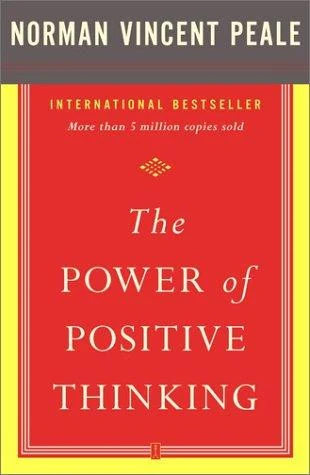
The Power of Positive Thinking
Norman Vincent Peale · 186 weeksMove the instructor’s sentence onto everyday objects
SHORT SOURCE EXCERPT“Write it on a card and put it in your pocket.”
After an account of a frightened trapeze student, Peale singles out the instructor’s sentence. He asks readers to copy it onto a card and suggests a pocket, desk, wall and mirror before explaining how he wants the image understood.
The point of transfer is explicit: words first encountered inside a story become words the reader is asked to place in the surroundings of ordinary life. The following interpretation supplies the intended use rather than leaving the copied sentence wholly unexplained.
The source in context.
Sports stories, personal encounters and scriptural assertions develop the expectation thesis. A trapeze instructor’s sentence is singled out for copying and visible placement, and the chapter later closes with a daily affirmation.
Open this chapterWhat this example supports
The point of transfer is explicit: words first encountered inside a story become words the reader is asked to place in the surroundings of ordinary life. The following interpretation supplies the intended use rather than leaving the copied sentence wholly unexplained.
Its limit
The source does not report the student’s eventual performance or a reader test. The proposed places are instructions, not evidence of compliance or effectiveness; the broad success claims remain Peale’s.
Source & edition
Norman Vincent Peale, The Power of Positive Thinking; Inspected Touchstone eBook with retrospective Preface; copyright 1952 and 1956, renewed 1980, First Touchstone Edition 2003; eISBN 978-0-743-25430-4.
Supplied text, lines 1247–1255. The short quotation is checked against the source.
The completed whole-source synthesis and all five segment summaries and section maps supplied candidate observations and the book map. This Codex editorial pass checked the live family gate before source access, verified the original source identity, contents, every main heading and chapter ending, and substantive final prose; read the full contexts of every admitted example; compared all 42 current canonical recognition rules and staged peer proposals; and checked base examples. Nominations were rewritten, narrowed or rejected. This is source-checked editorial review, not a new independently adjudicated whole-book reading.
Inspected Touchstone eBook with retrospective Preface; copyright 1952 and 1956, renewed 1980, First Touchstone Edition 2003; eISBN 978-0-743-25430-4