Explain why one disputed translation is used
Identify conflicting source accounts, explain the basis for choosing among them or retaining uncertainty, and make the narrative’s degree of precision agree with that decision.
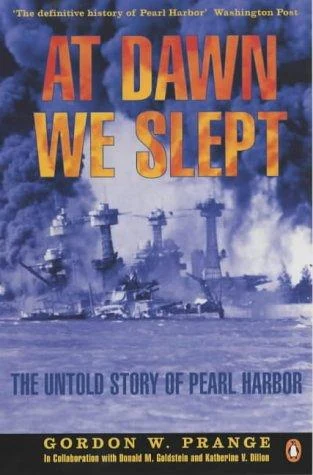
At Dawn We Slept
Gordon W. Prange & Donald M. Goldstein & Katherine V. Dillon · 19 weeksExplain why one disputed translation is used
SHORT SOURCE EXCERPT“Without hesitation, I believe the Army translation is correct.”
A consular dispatch as translated by the Army includes a consequential reference to a surprise attack. The authors disclose that Finnegan's Navy translation omits the key words, then report his later preference for the Army version and Yoshikawa's account.
The qualification sits where the phrase does argumentative work. The reader can distinguish the selected wording from an uncontested document and inspect the authors' stated basis for using it.
The source in context.
The last Saturday brings important messages, local decisions and fresh reporting from the Honolulu consulate. The discussion of a translated surprise-attack sentence includes the competing version and why the authors prefer one reading.
Open this chapterWhat this example supports
The qualification sits where the phrase does argumentative work. The reader can distinguish the selected wording from an uncontested document and inspect the authors' stated basis for using it.
Its limit
The source weighs the dispute toward the Army version; it does not merely leave the discrepancy unresolved. This study checks the book's treatment, not the original Japanese message or the counterfactual effectiveness of a timely warning.
Source & edition
Gordon W. Prange, in collaboration with Donald M. Goldstein and Katherine V. Dillon, At Dawn We Slept, supplied Penguin text with 1991 afterword.
Supplied text, lines 6704–6718. The short quotation is checked against the source.
Read the existing whole-source synthesis and all 24 ordered segment summaries, section maps, qualifications and gap reports. Checked all 81 numbered body headings against the contents, their source ranges, opening orientation and closing text, distinguishing photograph-caption inserts from narrative endings; checked the main ending and the separate afterword and source-apparatus boundaries. Read the complete retained example passages and their surrounding arguments, plus title-page, imprint and editorial-role disclosures. Verified all 24 consecutive segment source-input hashes and successful receipts. This is a source-checked editorial review using the prior machine reading, not a new second full-book reading, an independent model review or a historical fact audit.
Supplied Penguin text of the 1981 work, with the 1991 afterword; ISBN 9781101664216. The digital file's publication date is not independently established.