THE EXAMPLE INDEX

Find the practice.
See it in the book.

Passages, structures and practical devices, connected to their books and patterns. Every example keeps its source and review status.

Start with reviewed examples. Select any number to compare, with their source context intact.

Explore guided comparisons ↗
199 examples163 reviewed36 detected for reviewSee the corpus coverage ↗
163 examples · 53 books
AnalysisReviewed example
Show what disagreeing sources permit you to say ↗

The main narrative presents several incompatible figures for Louie’s weight at capture. The corresponding note traces different numbers to a postwar affidavit, early and later interviews, personal notes and Phil’s accounts instead of settling on one exact figure.

The reporting choice preserves the supported general point of extreme weight loss while exposing the uncertainty of numerical precision. The note supplies a route back to the versions underlying that restraint.

Unbroken cover
UnbrokenLaura Hillenbrand191 weeks · CSV
AnalysisReviewed example
Give the reader a standard before judging competing accounts ↗

Hawking defines a useful scientific theory through its explanatory economy and definite predictions, then describes provisional acceptance and possible disconfirmation. The Mercury example explains why Newton’s theory can remain practically useful after Einstein improves its predictions.

The author supplies the rule before the later disputes and immediately prevents a crude true-or-worthless reading of revision.

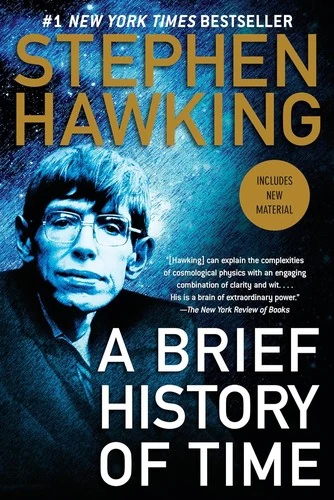
A Brief History of Time cover
A Brief History of TimeStephen Hawking112 weeks · CSV
AnalysisReviewed example
Give the reader a standard before judging competing accounts ↗

Hawking connects fluctuations permitted by the no-boundary proposal to the structure of the early universe and the COBE observations. He explicitly revisits the Popper criterion when characterizing the proposal.

The repeated evaluative language lets readers ask whether the preferred proposal has earned the same kind of assessment used for the rejected alternative. The foreword’s qualification about distinguishing alternatives is necessary context.

A Brief History of Time cover
A Brief History of TimeStephen Hawking112 weeks · CSV

24 of 163 shown

How to read the labels

Reviewed examples have a source-linked editorial interpretation. Detected candidates are exact passages or structures retrieved by an explicit rule and still need interpretation. Neither label establishes a cause of bestseller longevity. No missing text is counted as a negative example.