An island’s encounters carry attention across the food web
Move narrative attention from one participant to another through their direct encounter, then follow the new participant into a connected encounter so the relationships themselves organize the sequence.
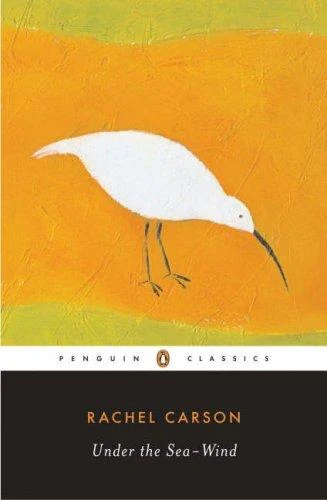
Under the Sea-Wind
Rachel Carson · 19 weeksAn island’s encounters carry attention across the food web
SHORT SOURCE EXCERPT“It was thus that the blue heron”
The narrative moves from the skimmer to terrapins in the same shallows. A terrapin startles a mullet that the heron catches. A rat then raids the terrapin nesting area and becomes absorbed in its catch while the rising tide allows the returning heron to reach it.
The heron is present before the rat’s episode and returns through a consequence of the shared tide. That connection lets the scene change its focal participant without making the next animal feel like an unrelated entry in a catalogue.
The source in context.
A rising and falling tide connects birds, fish, terrapins, a rat and fishermen around one small island. Attention passes among their encounters before Rynchops follows the ebbing water toward the sea.
Open this chapterWhat this example supports
The heron is present before the rat’s episode and returns through a consequence of the shared tide. That connection lets the scene change its focal participant without making the next animal feel like an unrelated entry in a catalogue.
Its limit
The exact encounter and the animals’ motives are narrated constructions, not independently confirmed field observations. The shift in attention demonstrates a craft operation rather than the frequency of a food-web relationship.
Source & edition
Supplied 2011 Open Road reissue text: fifteen chapters, glossary and later publisher back matter; referenced images absent.
Supplied text, lines 116–128. The short quotation is checked against the source.
Confirmed the current development-family gate before source access. Read the complete whole-source AI synthesis and the summaries, section maps, qualifications and gaps of all four ordered segments. Checked every numbered chapter against the contents and body, inspected all chapter openings and endings, and read the retained encounters and complete closing sequence in their actual source context. Inspected the glossary, publisher biography, captions and imprint for role and edition boundaries. This is a source-checked editorial pass, not a second complete reading, independent-model review or ecological audit.
Open Road Integrated Media reissue, 2011; ISBN 978-1-4532-1473-2. The imprint preserves copyright 1941 by Rachel L. Carson. Referenced illustrations and archival images are absent from the supplied text.