An odor problem its owner does not notice
Present a plausible explanation or expectation, show the observation or evidence gap it cannot account for, and return to the same question with a revised account that changes the later interpretation or application.
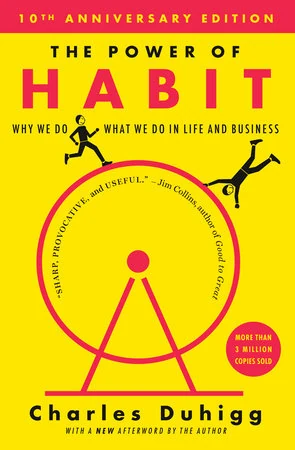
The Power of Habit
Charles Duhigg · 34 weeksAn odor problem its owner does not notice
The Febreze team visits a woman with nine cats who does not notice their smell. A useful product is missing the perceived cue the initial explanation assumed.
Chapter 2 does something stronger than illustrating a rule: it teaches an attractive first explanation, shows what it cannot explain, and makes the reader revisit the opening success with a better question.
The source in context.
Claude Hopkins appears to supply a simple formula through Pepsodent: offer a cue and an attractive reward. Then Febreze disrupts that neat answer. The product solves a real problem, and a delighted early customer makes its promise vivid, yet bottles sit unused. Research with a monkey anticipating juice introduces the missing concept of craving. Observations of people finishing their cleaning suggest a different place for Febreze in a routine. Finally, Duhigg revisits Pepsodent and questions Hopkins’s own explanation, drawing attention to the toothpaste’s sensory tingle. The chapter changes the meaning of its opening success after the reader has acquired a better way to interpret it.
Open this chapterWhat this example supports
Chapter 2 does something stronger than illustrating a rule: it teaches an attractive first explanation, shows what it cannot explain, and makes the reader revisit the opening success with a better question.
Its limit
This narrative makes reasoning inspectable; it does not prove the chosen explanations. The scientific claims, including the 2012 willpower account, would need independent current review before being taught as settled science.
Source & edition
Charles Duhigg, The Power of Habit (Random House, 2012), supplied ebook transcription.
Supplied text, lines 1230–1266. The description is an original editorial paraphrase, not a quotation.
Existing consecutive whole-source reading and chapter synthesis reused; three publication anchors reinspected in source. Chapter interpretation is editorial analysis.
2012 Random House supplied text, ebook ISBN 978-0-679-60385-6, version v3.1