A screen changes what the judges can evaluate
Close an abstract argument with a concrete change to the conditions under which its central action occurs.
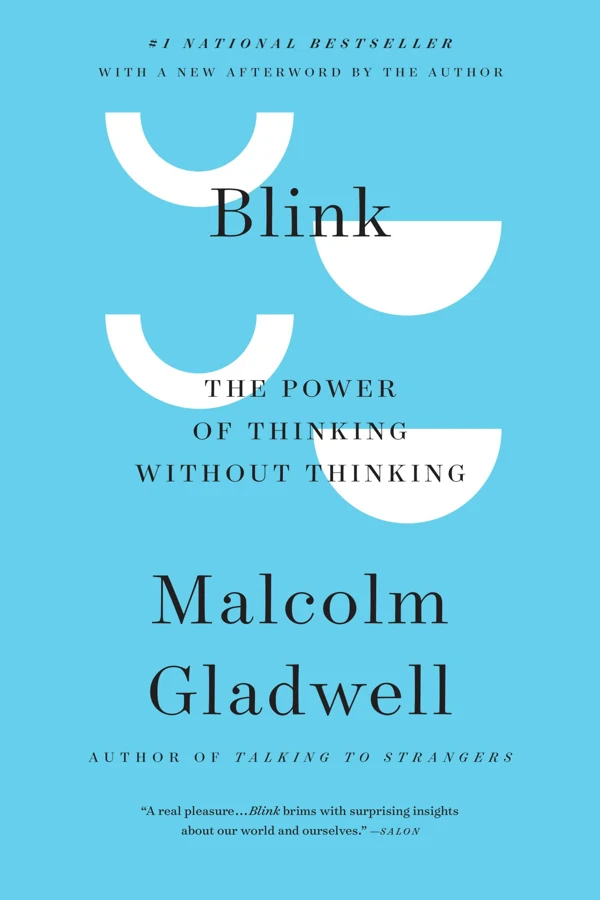
Blink
Malcolm Gladwell · 81 weeksA screen changes what the judges can evaluate
SHORT SOURCE EXCERPT“Abbie Conant was saved by the screen.”
The conclusion presents Conant’s screened audition, the prejudice that followed her reveal, and her subsequent dispute with the orchestra. It widens to audition rules that conceal identity and then states the broader idea of controlling the setting in which a rapid judgment happens.
The screen turns an abstract warning about bias into a visible design decision: preserve the sound relevant to the task while withholding an irrelevant cue. That concrete procedure gives the final generalization an image the reader can retain.
The source in context.
Abbie Conant’s audition and subsequent treatment make visible the difference between hearing a performance and seeing who produced it. The chapter describes changes to audition procedures, extracts a lesson about controlling conditions, and ends on Julie Landsman’s screened audition.
Open this chapterWhat this example supports
The screen turns an abstract warning about bias into a visible design decision: preserve the sound relevant to the task while withholding an irrelevant cue. That concrete procedure gives the final generalization an image the reader can retain.
Its limit
This is an analysis of the book’s narrated example and concluding move. It does not independently verify the historical account or quantify the screen’s effect.
Source & edition
Gladwell, Blink: The Power of Thinking Without Thinking; local text file labeled 2010, edition unconfirmed; LF line anchors.
Supplied text, lines 1150–1178. The short quotation is checked against the source.
Used the completed whole-source AI synthesis to identify candidate craft operations. Directly inspected introduction commitments, chapter headings and representative openings and endings, all published example spans, the chapter-four analogy and its explicit transfer, and the conclusion. Rewrote the study from those passages. This is a targeted editorial source check, not an independent scientific review or a new full rereading.
Inspected local text of Blink: The Power of Thinking Without Thinking; source filename labels 2010, but the extraction does not establish an edition date.