Success, failure, and trainability become three obligations
After a case supporting the central idea, name the contrary outcome and commit the book to explaining both.
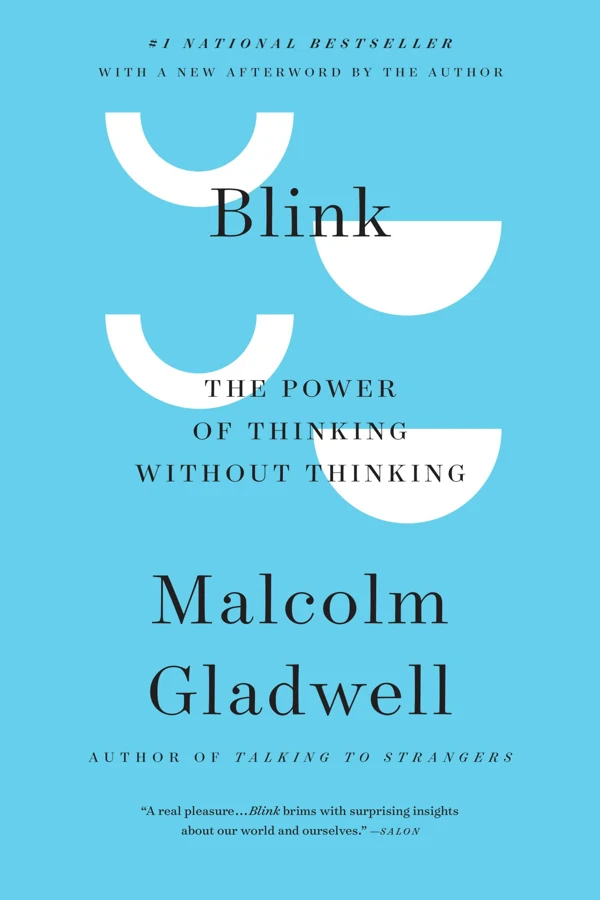
Blink
Malcolm Gladwell · 81 weeksSuccess, failure, and trainability become three obligations
SHORT SOURCE EXCERPT“when our instincts betray us”
Gladwell first says fast decisions can be as good as deliberate ones, then asks why intuition fails, and finally promises to examine its education and control. He uses the opening sculpture case on both sides: rapid expertise helps expose a problem, but interested experts can also miss it.
The sequence protects the book from a simplistic reading of its title. Its contrary cases are part of the announced subject, and the practical promise creates an obligation that the conclusion can later revisit.
The source in context.
The Getty sculpture puzzle places extensive formal assessment beside rapid expert reactions. Gladwell uses the puzzle to state three tasks: explain successful snap judgments, identify failures, and argue that these judgments can be educated.
Open this chapterWhat this example supports
The sequence protects the book from a simplistic reading of its title. Its contrary cases are part of the announced subject, and the practical promise creates an obligation that the conclusion can later revisit.
Its limit
The passage demonstrates the stated scope of the argument. It does not by itself establish a method for deciding when intuition is reliable.
Source & edition
Gladwell, Blink: The Power of Thinking Without Thinking; local text file labeled 2010, edition unconfirmed; LF line anchors.
Supplied text, lines 70–78. The short quotation is checked against the source.
Used the completed whole-source AI synthesis to identify candidate craft operations. Directly inspected introduction commitments, chapter headings and representative openings and endings, all published example spans, the chapter-four analogy and its explicit transfer, and the conclusion. Rewrote the study from those passages. This is a targeted editorial source check, not an independent scientific review or a new full rereading.
Inspected local text of Blink: The Power of Thinking Without Thinking; source filename labels 2010, but the extraction does not establish an edition date.